
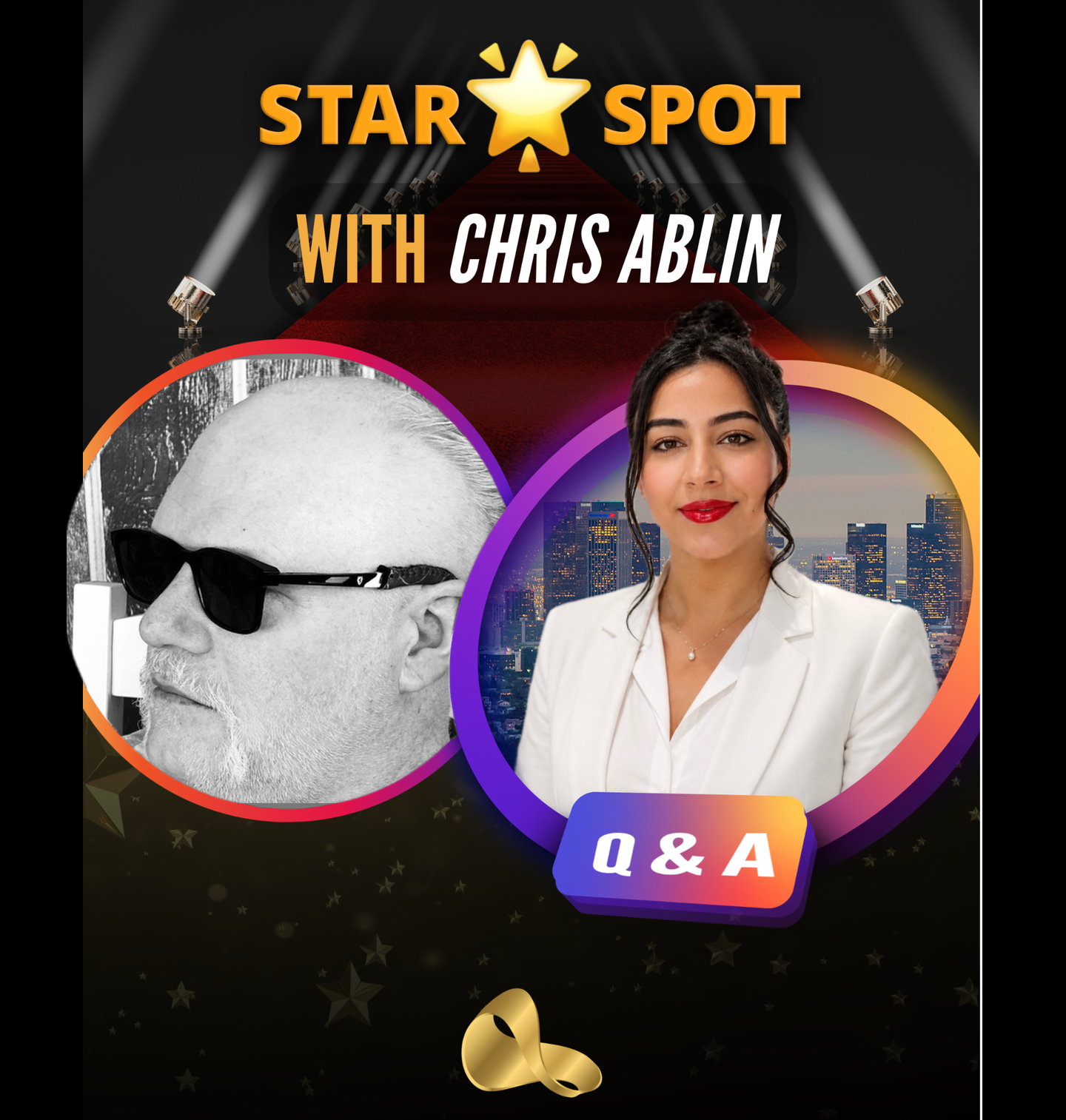
Chris Ablin on AI Music and “Burn Baby Burn” | ICMA 202
Chris Ablin on AI Music and the 2026 ICMA Award for “Burn Baby Burn”
After “Burn Baby Burn” won Best of AI Generative (Artist Directed) at the 2026 InterContinental Music Awards, Chris Ablin discusses the personal stories and creative choices behind his music.
Orange County artist Chris Ablin began releasing music under his own name in 2025. His track “Burn Baby Burn” won the 2026 ICMA Best of AI Generative (Artist Directed) award. In this written Q&A, Ablin discusses his approach to AI music, the prompts behind the winning track, and the experiences that inspired his other songs.
Who is Chris Ablin, and what is he working on now?
I’m based in Orange County, California. Outside music, I’m a CVS Pharmacy company driver and a proud Teamsters Local 952 union member. My creative life is focused on the intersection of human emotion, history and advanced audio technology. The 2026 InterContinental Music Award has fueled my current focus: developing The Ablin Saga: Frequencies, a multi-generational biographical film treatment and multimedia project about my family’s century-long connection to structural engineering and capturing hidden signals.
Before releasing music as Chris Ablin in 2025, how did your family’s work shape your creative interests?
My creative interests were shaped by my family. My grandfather, John B. Ablin, was a mid-century structural engineer who drew blueprints for iconic Los Angeles landmarks for Pereira & Luckman. In the 1970s, my mother managed high-voltage Hollywood phone lines, and in the 1980s, my father pioneered fiber-optic splicing.
I see a connection between building a structure, routing a phone line and writing a song: each involves structure and timing. Before releasing tracks as Chris Ablin in 2025, I had generated two tracks under the project Southbound Iron. Generative AI tools gave me a way to turn those family patterns and audio ideas into music.
What led you to use AI to make music?
I had a lifelong interest in creating music, even though I didn’t know how to play an instrument. My only formal musical experience was playing tenor saxophone in eighth grade. I loved it, but after a year my family moved to a school that didn’t have instruments, and I never had the chance to continue.
When I discovered Songer and modern AI music generators, it felt as if a door had reopened. I could guide the technology to build music from stories and ideas in my head without first mastering a physical instrument.
What inspired “Burn Baby Burn”?
The track came from a painful childhood memory. When I was 12, my family had just moved to the beach. I was a fair-skinned, blue-eyed, freckled redhead, and I spent the day trying to catch waves on my brand-new boogie board without realizing how badly the sun was burning me. By the next day, my entire face had blistered. The experience taught me to protect my skin, and I later turned that intense memory into five lines of lyrics.
How did you direct Songer on “Burn Baby Burn”?
I selected five genre and mood prompts: Pop, Electronic, Playful, Rhythmic and Classical. I wanted to hear how a modern, high-energy electronic beat could meet the structure of classical orchestration.
Songer generated two versions. The award-winning track was the second. I liked it so much that I kept it exactly the way it was. After that, I used MIXEA’s mastering tools to polish the frequencies.
Which musical details matter most to you in “Burn Baby Burn”?
I’m proudest of the rhythmic drive and sonic clarity. With generative tools, it can be difficult to keep background frequencies from muddying the vocals or central beat. I adjusted my prompts and used specific mastering layers to aim for a clean, high-energy mix where the bass and crisp high frequencies come through clearly. I wanted that sound to carry the cinematic tension I had imagined for the song.
How did “Spiders in My Hair” differ from “Burn Baby Burn”?
I made it the day after “Burn Baby Burn,” using the same five prompts: Pop, Electronic, Playful, Rhythmic and Classical. The idea came from a real, recurring annoyance: getting caught in spiderwebs while walking between my car and the front door. I turned that experience into a metaphorical story about relationships.
The challenge was to use the same prompt structure while giving the track a darker, edgier tension. I felt the result shifted from standard pop energy into a haunting, high-stakes anthem. “Spiders in My Hair” also appeared on the 2026 ICMA finalist list for Artist Directed AI Generative.
How did an experiment with Songer lead to “Keep Your Groove On”?
I wasn’t trying to replicate my earlier success. I was testing Songer’s limits and wanted to see whether I could guide it to create a cover of the theme song from the 1970s television series Baretta. The attempt didn’t go as planned. The generator rearranged the inputs and created a different rhythm.
I fell in love with the groove and kept the track as it came out. At that stage, I was still experimenting and learning what the system could do. The experience taught me that testing a tool’s limits can lead to something original that I would not have planned.
What did the 2026 ICMA award mean to you?
It was mind-blowing validation. When I first found the ICMA competition, I thought one of my tracks might be good enough to win because I was so impressed by what I was making with Songer and MIXEA.
I used to joke with my mother that Taylor Swift might hear one of my songs someday. We would laugh, and she would say, “She better not start calling here!” I have followed Swift since she first came on the scene. I’m not a diehard fan, but I love her music, and I think she inspires many independent creators.
Above all, I hope the award helps people notice the human direction behind AI-assisted music: the vision, real-life story and plan that guide the technology.
What is The Ablin Saga: Frequencies?
It is my larger creative goal: a multi-generational biographical film treatment and multimedia project about my family’s history in Los Angeles. The story reaches from my grandfather’s work on landmarks to my 2026 ICMA win.
The themes of survival, structural mathematics and capturing hidden signals are permanently encoded in my family bloodline. I see this award-winning music as setting the stage for that project. For me, the music is the soundtrack to a true American story that is just beginning to unfold.